The $30,000 Payment Mistake
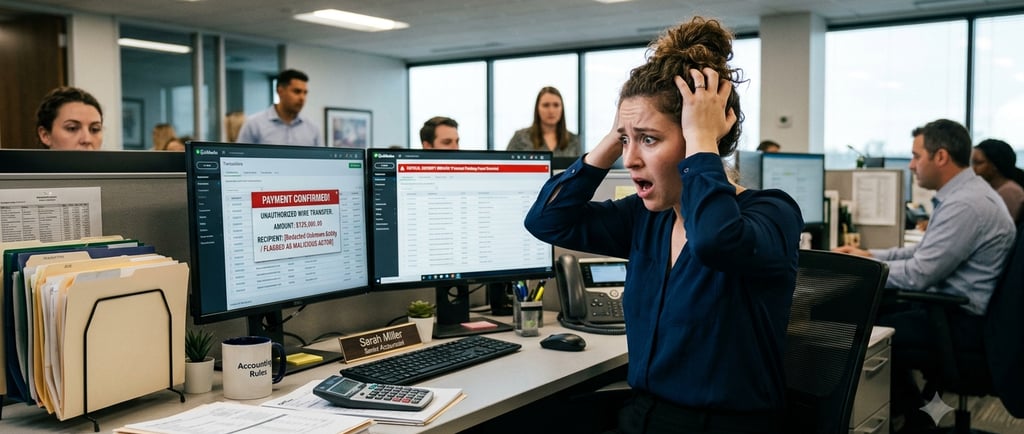

The $30,000 Payment Mistake: Why Small Businesses Must Verify Before They Pay
For many small businesses, the most dangerous cybersecurity incident does not always begin with ransomware, malware, or a hacker breaking into a server. Sometimes, it starts with a simple payment request.
That is exactly what happened to a fictional small business we will call Harbor Lane Services.
Harbor Lane Services was a growing company with a busy office, a small accounting team, and several vendors supporting its daily operations. Like many businesses, invoices came in regularly. Some were expected. Some were not. Between email, online portals, project deadlines, and customer needs, the team was constantly moving.
One Tuesday morning, an employee in the accounting department received an email that appeared to come from a known business contact. The message was professional, direct, and urgent. It stated that a payment was overdue and needed to be sent immediately to avoid service disruption. The email included an invoice, payment instructions, and banking details.
At first glance, nothing seemed unusual. The company name looked familiar. The email signature looked legitimate. The amount was large, but not impossible for the type of services Harbor Lane sometimes purchased. The message also created pressure by suggesting that delays could affect operations.
To help avoid a service issue, the team member processed the payment.
There was one major problem.
No one verified whether the charge was real. No one called the vendor using a known phone number. No one confirmed whether the banking details matched previous payment records. It looks like management wasn't consulted to confirm the expense was approved. The money was sent exactly where the email instructed.
By the time the company discovered the payment request was fraudulent, the $30,000 was gone.
The funds had been transferred out quickly and could not be recovered. Harbor Lane contacted the bank, filed reports, and investigated what happened, but the result was painful and final: the organization was out $30,000.
For a small business, that kind of loss is not just an accounting problem. It can affect payroll, operations, vendor payments, cash flow, growth plans, and leadership trust. One rushed payment can create weeks or months of damage.
The Real Problem Was Not Just the Scam
The scam worked because the business lacked a robust verification process.
The employee was not trying to make a mistake. In fact, they were trying to help. That is what makes these scams so dangerous. Criminals know how businesses operate. They understand urgency, invoices, vendor relationships, and internal pressure. They know that if a request looks normal enough, someone may process it without slowing down.
That is why unauthorized payment scams are so effective. They do not always require advanced technical skills. Many times, they rely on confusion, speed, trust, and weak approval processes.
The attacker does not need to break down the front door if someone inside is willing to open it for them.
Validate the Charge Before Paying
Every small business should have a simple rule: no unexpected payment should be processed without validation.
Before sending money, the business should confirm that the charge is legitimate. That means checking whether the company actually ordered the product or service, whether the invoice matches an approved purchase, and whether the amount makes sense.
If the charge is unfamiliar, urgent, unusually large, or tied to a new vendor, it should be paused until verified.
A simple internal check could include asking:
Did we actually request this product or service?
Is this vendor already approved?
Does this invoice match a contract, purchase order, or known agreement?
Has leadership approved this amount?
Is this payment request expected?
Has anything changed from how we normally pay this vendor?
If the answer is unclear, do not pay it yet.
Validate Where the Funds Are Going
It is not enough to validate the invoice. The business must also validate the destination of the funds.
Many payment scams involve real-looking invoices but fake banking information. In some cases, criminals impersonate a real vendor and claim their payment details have changed. If the business updates the payment destination without verification, the money may go directly to the attacker.
Any request to change bank account information, routing numbers, wire instructions, mailing addresses, or payment portals should be treated as high risk.
The safest approach is to verify the change using a trusted contact method already on file. Do not call the phone number listed in the suspicious email. Do not reply directly to the message. Use the vendor’s known phone number, official website, signed contract, or existing account portal.
That one extra step can be the difference between stopping a scam and losing thousands of dollars.
Small Businesses Need a Payment Verification Process
This does not have to be complicated. A small business does not need a massive finance department to reduce risk. It just needs clear rules that everyone understands.
At a minimum, businesses should require:
Approval for payments above a certain dollar amount
Verification of new vendors before payment
Secondary approval for wire transfers or ACH payments
Confirmation of any bank detail changes.
Use of known contact information to verify payment instructions
Documentation of who approved the payment and why
Employee training on invoice and payment scams
The process should be written down, shared with the team, and followed every time. It should not depend on memory, guesswork, or whether someone “feels” the email is legitimate.
Slow Down Before Money Goes Out
Scammers want speed. Businesses need a process.
That does not mean every payment should become a bureaucratic nightmare. It means payments should have enough friction to stop obvious mistakes before money leaves the account.
The uncomfortable truth is this: once money is sent to a scammer, recovery is often unlikely. Banks may try to help. Law enforcement may take a report. Insurance may or may not cover the loss. But none of those are guaranteed. The best protection is prevention.
Harbor Lane Services lost $30,000 because one payment request looked real enough and moved fast enough to avoid proper review. That story may be fictional, but the risk is very real.
For small businesses, the lesson is simple:
Validate the charge. Validate the vendor. Validate the destination. Then pay.
Because once the money is gone, “we thought it was real” will not bring it back.